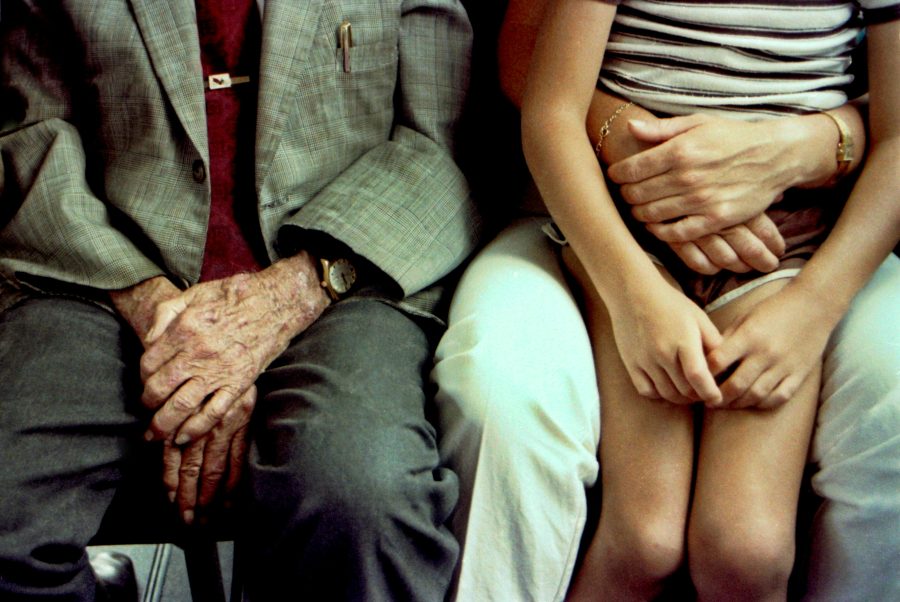
5 ways the justice system is failing older victims of domestic abuse?
"It must be remembered that all domestic abuse is an abuse of power. A victim-survivor of any age deserves for the abhorrence of this to be recognised and stopped."
According to Hourglass, a leading champion of the fair treatment of older people, 1 in 5 people have experience of, or knowledge of, abuse of an older person.
Yet older people are often the invisible and forgotten victims of domestic abuse in our justice system:
- Sexual abuse is virtually unimaginable in a society that treats older women as sexless;
- Physical abuse is often explained away for everyone else’s comfort;
- Controlling behaviour is a norm of many marriages from the post-war era;
- Economic abuse can masquerade as someone acting in their best interests; and
- Psychological abuse goes undetected in this more isolated demographic.
In furtherance of June 15th’s Elder Abuse Awareness Day, this post seeks to shine a light on the points of vulnerability for older victims of domestic abuse.
1. The abuse of older victims is overlooked
A 2024 Age UK report highlights that the older generation as a whole is reporting higher and higher levels of social isolation.
As such, our medical and care professionals are sometimes the only people outside of the household to have access to older patients.
It is imperative, then, that they recognise any signs of abuse, physical or otherwise, as quickly as possible.
But unfortunately, this is impeded by a whole host of factors:
- The “ideal” victim stereotype – in the British Journal of Criminology, Bows et al. observed that an older adult is “not ideal enough” to be recognised as a victim of domestic abuse by clinicians – the stereotype of a young woman with children suffering intimate-partner physical abuse still prevails.
- Misdiagnosis of symptoms – Gisele Pelicot, a famous survivor of prolonged sexual abuse facilitated by her husband, suffered from persistent gynaecological issues. It is argued by Celebrate Aging that stereotypes around older women being “past their prime” contributed significantly to this devastating oversight.
- Perpetrator interference – some older victims may never attend medical appointments alone. If victims are questioned about their physical or emotional state, the College of Policing’s guidance warns that accompanying perpetrators may “exploit the victim’s vulnerabilities” to discredit their version of events, citing their lack of mental capacity.
In short, the invisibility of this generation to the medical profession is concerning.
The fewer healthcare professionals alert to older domestic abuse, the fewer opportunities there are for older victims to access support and improve their safety.
2. The abuse of older victims is minimised
Of course, not all domestic abuse of older victims goes undetected. In many cases, the harm is spotted acutely.
But worryingly, it is not always given the same weight as it is in other age groups.
This is evident in the following:
- The “welfarisation” of abuse – when abuse is identified, the research shows abuse is likely “repackaged” as a welfare concern only. For example, a victim may be moved into a care home as a “solution.” As well as denying proper access to justice for the harm caused, this mischaracterisation prevents the survivor from accessing specialist domestic abuse support and advocacy services.
- The sympathy for the abuser – typically, perpetrators of domestic abuse do not garner sympathy. But in the case of older victims, they frequently do. The abuse is often attributed to care-giver overwhelm or the challenging health demands of their victim-survivor (e.g. dementia). But there is no excuse for abuse. The abuser could be both criminalised and rehabilitated with the right approach.
- The public tolerance for domestic abuse of older people– an Hourglass poll reveals that 34% of UK residents don’t believe that “acts of domestic violence directed towards an older person” count as abuse. With this disturbing tolerance at play across society, this is bound to trickle down into the decision-making of individuals along the criminal justice pathway.
It must be remembered that all domestic abuse is an abuse of power.
A victim-survivor of any age deserves for the abhorrence of this to be recognised and stopped.
3. The system is not set up with older victims in mind
Throughout the criminal justice pathway, the system is not responding to the needs of older victims.
And little wonder when the Crime Survey of England and Wales only began collecting information on victims and survivors of domestic abuse aged 75+ in 2020.
This is apparent at every juncture.
For example:
- The outreach campaigns are not geared towards older victims – older interviewees in a Safe Lives report spoke of the imagined value in seeing themselves represented in the support services’ campaigns, instead of a young woman with children, and of having the information advertised at bus stops and in local shopping areas.
- Inadequate first-response training on the complexities of older victim abuse – The HMICFRS Inspectorate has found that there is little evidence that first-responders are seeking to identify and record witness needs and vulnerabilities. This suggests that things such as victims’ expressive communication difficulties (e.g. from a stroke) or capacity considerations (e.g. from dementia) are not being factored into decision-making.
- “Solutions” can be inaccessible for older victims – Nearly half of older victims of domestic abuse have a disability or mobility issue, but Women’s Aid’s Domestic Abuse Audit 2023 found that only 1.1% of refuge vacancies were suitable for someone with a mobility issue.
- IDVAs are not assigned frequently to older victims – an IDVA is an Independent Domestic Violence Advisor whose allocation should be automatically triggered by a high score on the Domestic Abuse Risk Assessment (DASH). However, because the standard DASH checklists fail to capture key abuse indicators for this age group (e.g. neglect), only 3% of victims aged 60 or over are accessing IDVA services, according to Safe Lives.
- Older victims of abuse are often viewed as “unreliable witnesses” – Dr Lombay, in her research into Domestic Abuse in the Older Population, found there to be an assumption that an older person’s testimony is “unreliable.”
In essence, the pathways to justice haven’t been built with the older generation in mind.
The effects of the pre-2020 data black hole were far-reaching, then, perhaps.
4. Abuse has been normalised for older victims
Safe Lives data shows that an alarming 25% of older victims have lived with abuse for 20+ years.
After such a period, the abuse is likely normalised for the victim-survivor, and they are far less likely to identify their situation as abuse and seek help.
This is bolstered by an interplay of circumstances:
- The house might be seen as a private domain – discussions with others can be key in recognising abuse for what it is. But, as Safe Lives has found, older victims are more likely to hold the ingrained belief that it’s not socially acceptable to discuss matters that occur behind closed doors, which prevents vital consciousness-raising.
- Peer networks might reinforce that abuse is just part of life – even if survivors have attempted to reach out to friends, especially in the past, they may have been encouraged to stay silent, being reminded that marriage is “for life until death do us part,” no matter what, especially in particular cultural and religious backgrounds.
- Social isolation – for others, discussions with anyone are impossible. A common aspect of domestic abuse is forced social isolation, which prevents peer support and points of comparison with non-abusive relationships, whether intimate, familial, or carer-caree.
- Digital exclusion – the EU defines this as the marginalisation of an individual or group deprived of full access and capacity to use ICT (and the internet). Dewi’s choice highlights that this applies to a higher proportion of people aged 75 or over. With the internet increasingly becoming the main avenue to help-seeking (see the Mind help page as an example), this is yet another barrier to awareness-raising and support -let alone an opportunity for economic abuse by a more tech-savvy family member or carer.
As in all things, knowledge is power.
So a harmful echo chamber and an isolation from the wider world are leaving older victims powerless.
5. Older victims fear the unique implications of reporting their abuse
Reporting domestic abuse is never easy, but reporting abuse as an older adult can bring its own set of distinctive challenges.
For example, older victims may be fearful of:
- Criminalising their older children – According to Age UK, older people are just as likely to be abused by an adult child as they are by an intimate partner. Despite suffering abuse at their hands, older victims may still struggle to see their adult children punished
- Being cut off from their grandchildren – Hourglass identifies threatening to deny access to grandchildren as a common form of abuse. Many victims may choose to prioritise maintaining this relationship over reporting the abuse of their adult children.
- Depriving the abuser of a carer – the abuser may abuse without capacity due to mental and physical health symptoms outside their control. And with older people providing the majority of informal care, there are a significant number of victims who want the abuse to stop but feel guilty that leaving the abusive situation may mean leaving their loved one without their most informed carer.
As Safe Lives observes, these reasons may go some way in explaining why only 6% of older domestic abuse victim-survivors self-refer their abuse aged 61+ compared with 14% for those under 61.
Forgotten No More
As a society, we cannot afford for our older people to be defined by the stereotypes in our collective mind, at the expense of reality.
More adequate funding, data collection, training, and legislation are needed to support our older victims on their path from abuse to justice.
We forget we are an aging population at our peril – the number of victims is growing.
Freelance Copywriter
Photo: Bill Fairs on Unsplash